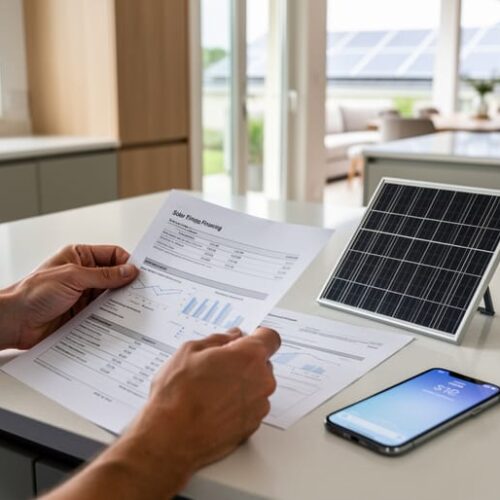

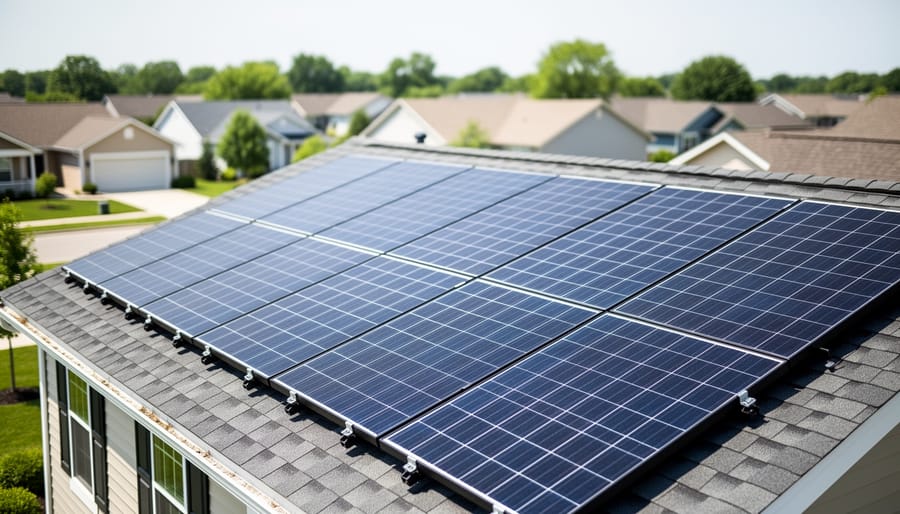
A solar loan is the better choice for most homeowners who plan to stay put, because you own the system, keep the long-term savings, and build equity in your home. A solar lease wins in a narrower case: you want panels on your roof with little or no upfront cost and no ownership responsibilities.
The core difference is simple. With a loan, you borrow money to buy the system and repay it with interest, while you claim whatever tax benefits and incentives you qualify for. With a lease, a third party owns the panels, and you pay a fixed monthly fee for the power they produce. You trade lower lifetime returns for lower commitment.
Cost is where the two paths split furthest, and where the fine print matters most. Loans can carry dealer fees baked into the price, and leases often include annual payment escalators that quietly raise your bill over time. Before you sign anything, learn how to spot hidden loan charges so the quoted payment matches what you’ll actually pay.
This guide compares both options side by side: costs, fees, maintenance duties, and what happens when you sell your home. By the end, you’ll know which one fits your budget, timeline, and appetite for ownership.
Solar Lease vs. Solar Loan at a Glance
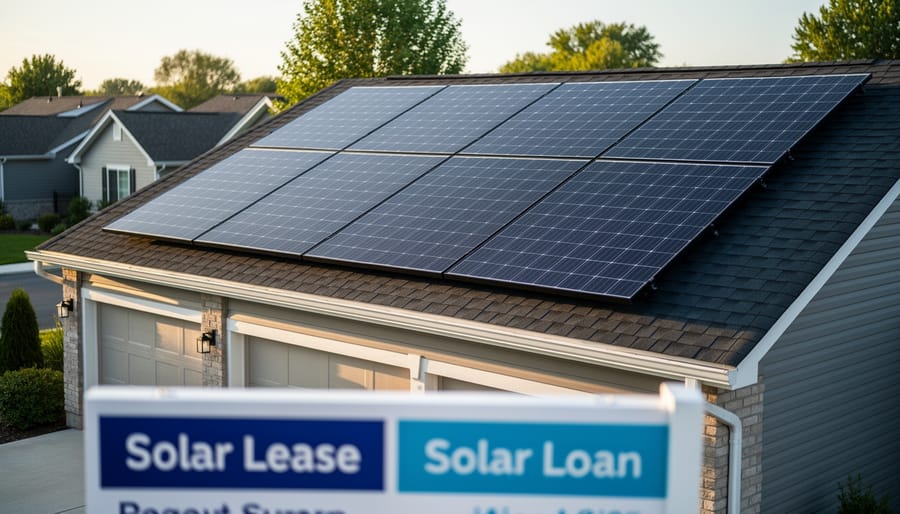
The core difference comes down to who owns the panels. With a loan, you do. With a lease, a third-party company does, and you pay to use the power the system produces. That single distinction drives nearly everything else in the table below.
| Factor | Solar Lease | Solar Loan |
|---|---|---|
| Ownership | Leasing company owns the system | You own the system from day one |
| Upfront cost | Often little or none | Varies; some loans require a down payment |
| Monthly payment | Fixed fee, sometimes with a yearly escalator | Principal plus interest, fixed or variable by loan |
| Federal tax credit | Generally claimed by the lessor, not you | Generally available to you as the owner |
| Maintenance | Usually handled by the leasing company | Your responsibility, apart from equipment warranties |
| Contract length | Commonly 20 to 25 years | Commonly 5 to 25 years |
| Home sale impact | Buyer must approve a lease transfer | Loan is paid off at closing; owned system may add value |
Treat these as typical patterns rather than guarantees. Individual contracts vary, and incentive rules can change, so confirm current eligibility with a tax professional before you count on any credit.
The table also hides a cost trade-off. A lease keeps cash in your pocket early on, but you give up ownership benefits. A loan asks more of you at the start and puts the savings and the responsibility in your hands. The sections below break down how interest, fees, and escalators shape the total cost of each path.
What Each Option Is and How the Charges Work
How a Solar Lease Works
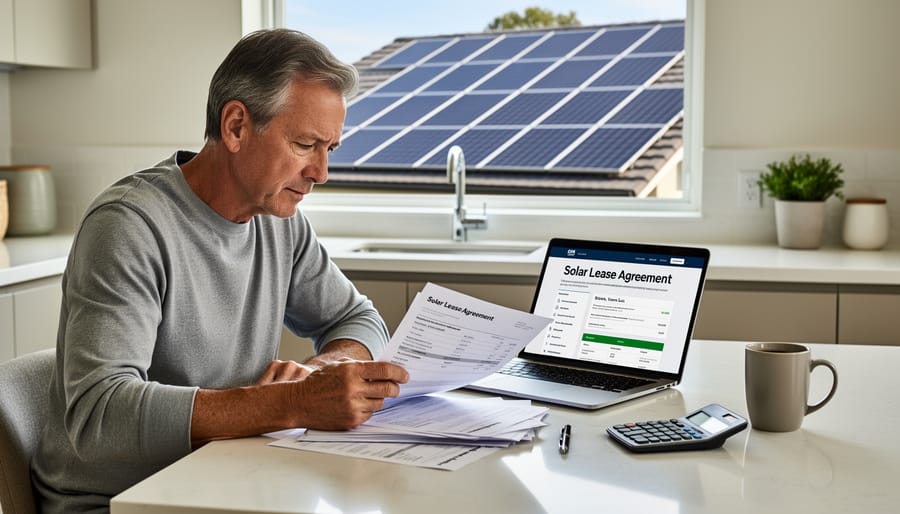
In a solar lease, a third-party company owns the panels, installs them on your roof, and keeps them running. You pay a fixed monthly fee to use the system and the electricity it produces. You don’t own anything, which is why leases usually come with little or no money down. Because the provider needs years to recoup its investment, solar leases span 10-25 years and most contracts land at the longer end. As renewable energy trends push more homeowners toward solar, the lease remains a popular entry point for people who want panels without the upfront bill.
- Solar lease
- An agreement to pay a set monthly fee for a system the provider owns and maintains on your property.
- Power purchase agreement (PPA)
- A contract where you pay per kilowatt-hour the system produces instead of a flat monthly fee.
- Payment escalator
- A clause that raises your monthly payment by a set percentage each year of the term.
- Buyout clause
- A provision letting you purchase the system before or at the end of the contract, usually at a stated price or fair market value.
Watch the escalator closely. A payment that looks cheap in year one can climb every year, sometimes faster than utility rates actually rise. Ask for the full payment schedule, not just the starting number.
If you sell your home, the lease typically transfers to the buyer, who must qualify and agree to take it on. A reluctant buyer can complicate the sale.
When the term ends, you usually have three choices: renew, have the system removed, or buy it. Confirm which options your contract offers and what each costs before you sign.
How a Solar Loan Works
With a solar loan, you borrow money to buy the system outright, so you own it from the day it’s installed. That single fact shapes almost everything else about this option, from incentives to repairs. Before comparing offers, it helps to understand loan eligibility since your credit profile and home equity influence which products you’ll be offered.
Solar loans come in two main forms. A secured loan is backed by collateral, often your home, and usually carries a lower interest rate. An unsecured loan requires no collateral, which makes approval simpler but typically means a higher rate. Terms commonly run from 5 to 25 years, and rates vary widely based on credit, lender, and loan type, so treat any advertised figure as a starting point, not a promise.
The charge that surprises people most is the dealer or origination fee. Some lenders offer a seemingly low interest rate or even a 0% introductory rate, then recover their costs by building a fee into the loan principal. That fee can raise the amount you borrow by a meaningful percentage, and you pay interest on it for years. Always ask for the cash price and the financed price side by side so the markup is visible.
Ownership brings real advantages. Because the system is yours, you’re generally the one eligible to claim available incentives, though you should confirm current rules with a tax professional. You also take on maintenance, inverter replacement, and monitoring. Most owners track production through a manufacturer app, which makes it easy to spot underperformance early and use any equipment warranties.
Solar Lease vs. Solar Loan, Dimension by Dimension
Upfront Costs and Monthly Payments
Most solar leases ask for little or no money down, which is their main draw. You sign, the installer builds and owns the system, and you start paying a fixed monthly fee once it’s running. A solar loan works differently. Some lenders offer zero-down options, but others expect a deposit, and either way you’re financing the whole system rather than renting it.
That’s where dealer fees come in. Installers sometimes build a fee into the loan to cover the cost of offering a below-market interest rate, and it gets rolled into your principal. A loan that looks cheap on the monthly payment can quietly carry a balance well above the true solar panel cost. Ask for the cash price and the financed price side by side.
For monthly payments, compare each quote against your current utility bill. A good lease or loan payment should land at or below what you pay the utility now, ideally with room to spare. Check whether the lease payment rises each year, since a lower starting number can overtake your utility bill later.
Total Cost Over the Contract Term
Lifetime cost is where the two options really diverge, because the sticker monthly payment hides how each one changes over time. A loan’s cost is mostly interest plus any dealer or origination fees rolled into the principal. A lease’s cost is a fixed fee that often rises each year through an escalator clause.
Here is a hypothetical example, not a real quote, using round numbers only to show the mechanics. Suppose a lease starts at $150 per month with a 2.9% yearly escalator over 20 years. Total payments would land around $44,000. A $25,000 loan at a moderate interest rate over 20 years, with a dealer fee already baked into that balance, might total roughly $35,000 to $40,000 in payments, and you would own the system at the end. Change the rate, the fee, or the escalator, and the ranking can flip.
That is why you should never compare monthly figures alone. Ask every installer or lender for an itemized payment schedule that shows each year’s payment, the escalator percentage, all fees, and the total of all payments. Put the schedules side by side and compare the 20-year totals.
Tax Credits, Incentives, and Ownership Benefits
Who owns the system generally decides who can claim incentives. With a loan, you own the panels from day one, so you are typically the one eligible for any federal tax credit or state and local incentives tied to ownership. With a lease, the provider owns the equipment, which usually means the provider, not you, claims those benefits.
That doesn’t mean leaseholders get nothing. Some providers pass part of the savings through in their pricing, such as a lower monthly rate or a smaller escalator. Whether they do, and by how much, varies by company, so compare offers line by line rather than assuming the discount exists.
Tax credit rules have changed over time and may change again. Before you commit to either path, confirm current eligibility with a qualified tax professional and the IRS or your state’s program administrator. They can tell you what applies to your situation and how much of the benefit you can actually use. Once you have that answer, you can factor it into how much you’ll save under each option.
Maintenance, Warranties, and Performance Risk
Under a lease, the third-party owner typically handles repairs, monitoring, and often a production guarantee, since their payments depend on the system performing. If an inverter fails, that’s generally their problem to fix, though you should confirm response times and whether the guarantee is stated in kilowatt-hours or as a percentage of expected output. Leases may also exclude roof damage or shading changes, so read what voids coverage.
With a loan, you own the system, so performance risk is yours. Equipment warranties from the manufacturer usually cover panels for 20 to 25 years, while inverters often carry shorter terms, commonly 10 to 12 years, which means a replacement could land mid-loan. Installers may offer a workmanship warranty and optional monitoring plans, but these vary widely, so get the terms in writing.
Battery storage adds another layer. Batteries have their own warranties, usually tied to cycles or capacity retention, and some leases don’t include them at all. Ask who covers a failed battery or inverter, how long the warranty runs compared to your payoff date, and whether monitoring is included or an extra monthly cost.
Selling Your Home, Refinancing, and Other Fine Print

Selling a home is where the financing choice stops being abstract. With a lease, the buyer has to take over the agreement. They apply for approval, the lessor runs a credit check, and the contract is assigned to them. Some buyers walk away rather than inherit 15 more years of payments, and a rigid transfer clause can stall a closing.
A loan works differently. The system is yours, so you pay off the remaining balance at closing from the sale proceeds, much like a mortgage. If the sale price covers the loan, the process is simple. If you owe more than the buyer will credit for the panels, you may have to bring cash to the table.
Both paths can leave a paper trail on your title. Lenders and lease providers often file a UCC lien (a Uniform Commercial Code filing) against the solar equipment, and sometimes a fixture filing tied to the property. Title companies will flag it, and you’ll need a release or a payoff statement before the sale or a refinance can close. Refinancing a mortgage with a solar lease in place may also require a lender to sign off on the lessor’s lien position.
Appraisers tend to treat the two systems differently. An owned system may add value to the home. A leased system is usually seen as a contract the buyer takes on, not an asset they receive. Appraisal practices vary by market, so ask a local appraiser how they’d handle yours.
Before you sign, read the fine print on these points:
- The escalator rate, and whether it applies every year or only after a set period.
- The transfer clause, including who approves a buyer and what fees apply.
- Any prepayment penalty or early termination fee on a loan or lease.
- The buyout price formula, and when you’re allowed to exercise it.
- Lien filings, and who is responsible for releasing them.
- The performance guarantee, and what remedy you get if production falls short.
- Removal terms, including who pays and who repairs the roof afterward.
If any of these are vague in the contract, get them clarified in writing before you commit.
Which Option Should You Choose?
Your choice comes down to what you value most: long-term savings and ownership, or low upfront cost and less responsibility.
A solar loan tends to fit homeowners who plan to stay put for a decade or more. You own the system from day one, so you’re positioned to claim eligible incentives and capture the savings after the loan is paid off. Strong credit helps here, since it influences the interest rate and which lenders will approve you. If you also have enough federal tax liability to use a tax credit, ownership gives you a direct way to benefit. Confirm current eligibility with a tax professional or the program administrator, since rules change.
A lease fits a different profile. If you’d rather avoid a large upfront outlay, don’t want to deal with repairs or monitoring, or have no appetite for tax paperwork, a lease keeps things simple. The provider owns and maintains the system, and you pay a fixed monthly fee. The tradeoff is that you typically give up the ownership benefits, and an escalator clause can raise payments over time.
Your timeline matters just as much. If a move is likely within a few years, a lease means finding a buyer willing to take over the agreement, while a loan means paying off the balance at closing. Neither is impossible, but both add steps worth planning for.
Before committing, ask for itemized quotes for both options. An independent energy advisor or a certified installer can help you line them up side by side and run the numbers for your home, your credit profile, and how long you expect to stay.
Solar Lease vs. Solar Loan: Common Questions
Most homeowners comparing these two paths get stuck on the same handful of questions. Here are straight answers to the ones that come up most.
Can I buy out a solar lease early?
Often, yes, but the terms vary by contract. Some leases include a buyout option at a set price or fair market value, while others restrict it or charge an early termination fee, so check the buyout clause before you sign.
Do dealer fees affect my solar loan?
They can. Dealer or origination fees are frequently rolled into the loan principal, which means you pay interest on them for the life of the loan and your true cost runs higher than the quoted system price.
What happens to a solar lease if I sell my home?
The lease usually has to transfer to the buyer, who must qualify and agree to take it over. If the buyer declines, you may need to buy out the lease or pay a termination fee to close the sale.
Are leased panels eligible for tax credits, and is a PPA the same as a lease?
Because the provider owns a leased system, it generally claims any available incentives rather than you, though some may pass savings through in pricing. A power purchase agreement (PPA) is a close cousin, but you pay per kilowatt-hour produced instead of a fixed monthly fee.
Credit is another common worry. A loan with fair credit is sometimes possible, but expect a higher interest rate, which raises your total cost, so compare several lenders before committing. Leases typically apply credit checks too, though the requirements can differ from lender to lender.
Whatever you choose, ask for an itemized payment schedule in writing. It shows exactly how interest, fees, and any escalator clause shape what you pay each year, and it makes side-by-side quote comparisons far easier.
A solar loan generally fits homeowners who want to own the system and capture long-term savings. A lease fits those who want little or no upfront cost and prefer to hand off maintenance and performance risk. Neither is automatically cheaper, and the answer depends on your numbers.
Before you commit, judge each offer by its total lifetime cost. For a loan, that means the interest rate, any dealer or origination fees baked into the principal, and what you’ll pay over the full term. For a lease, it means the starting payment plus every yearly escalator across 20 to 25 years. A low first-month bill can hide a much higher total.
Get at least three itemized quotes and ask each provider for a full payment schedule. Compare them side by side, read the contract terms on transfers, prepayment, and early termination, and run the figures with a tax professional before signing.