
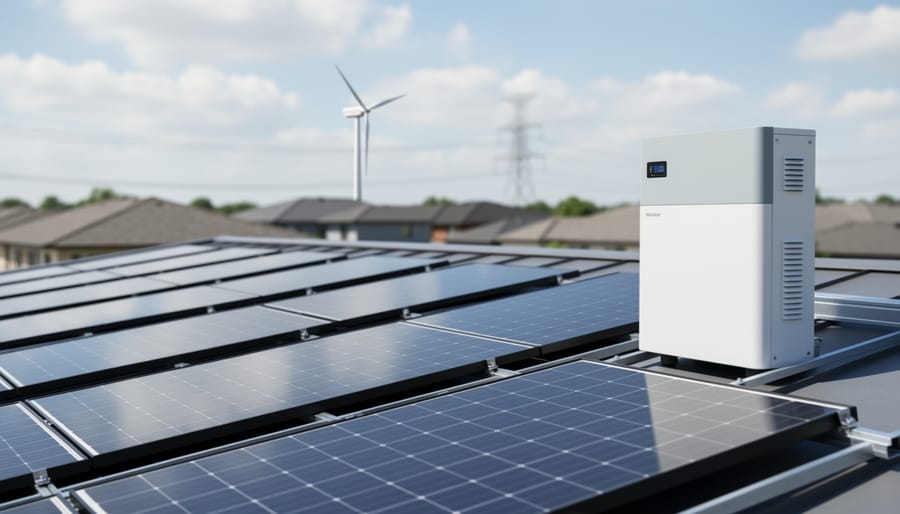
Trends in renewable energy refer to the evolving patterns, technologies, and market shifts shaping how we generate, store, and distribute clean power. These trends encompass everything from breakthrough battery chemistries and next-generation solar panels to policy changes driving adoption and new financing models making renewable systems accessible to more households and businesses.
Understanding these trends matters because the renewable energy landscape has transformed dramatically in recent years, and what seemed cutting-edge just a few years ago can now be outdated or economically uncompetitive. For homeowners and business owners considering solar installations, staying informed about current developments means making smarter investment decisions. You’ll know which technologies offer the best return, which innovations have moved from laboratory curiosity to reliable commercial products, and which market forces might affect installation costs or available incentives.
The clean energy sector is moving faster than most people realize. Solar panel efficiency has climbed steadily while costs have dropped to historic lows. Energy storage systems have become practical for residential use, not just utility-scale projects. Grid integration technologies now allow property owners to participate in virtual power plants, turning individual solar arrays into revenue-generating assets. Meanwhile, manufacturing processes have grown more sustainable, and new materials promise to push performance boundaries further.
This article breaks down the major trends reshaping renewable energy in 2026, examining how each development works, what categories of innovation are gaining traction, and how these shifts translate into practical applications for anyone exploring solar energy. Whether you’re weighing a residential installation or planning a commercial project, these trends will influence your options, costs, and long-term benefits.
Understanding Renewable Energy Trends: A Definition
A renewable energy trend isn’t simply a new solar panel model or a slight efficiency bump in wind turbine output. True trends represent measurable shifts in how clean energy technologies are deployed, financed, integrated into existing infrastructure, or adopted by consumers. They change the fundamental calculus for homeowners and businesses evaluating renewable investments.
The distinction matters because the solar industry loves buzzwords. Every manufacturer claims their product embodies the “latest trend,” but incremental improvements, like a photovoltaic cell gaining 0.5% efficiency, differ fundamentally from transformative shifts that alter market dynamics or unlock new applications. A genuine trend reshapes what’s possible or practical. For instance, the plummeting cost of lithium-ion batteries over the past decade wasn’t just an improvement; it enabled the entire residential solar-plus-storage market that barely existed before 2015.
Understanding renewable energy trends requires familiarity with several technical and economic concepts:
- Grid Parity
- The point at which renewable energy costs the same as or less than electricity from conventional sources without subsidies. Achieving grid parity transforms renewables from an environmental choice to a purely economic one.
- Capacity Factor
- The ratio of actual energy output to maximum possible output over time. Higher capacity factors mean more consistent power generation, directly affecting system economics and grid integration feasibility.
- Levelized Cost of Energy (LCOE)
- The total lifetime cost of an energy system divided by its total expected output, creating an apples-to-apples comparison across different technologies and fuel sources.
- Distributed Generation
- Small-scale power production located near where energy is consumed, such as rooftop solar panels. This contrasts with traditional centralized power plants and represents a structural shift in grid architecture.
Why track these trends? Because they signal when renewable technologies transition from niche solutions to mainstream options with compelling financial returns. A homeowner who installed solar in 2010 faced different economics, technology limitations, and financing options than one considering installation in 2026. Recognizing which trends have staying power versus which represent temporary hype helps you time investments wisely and select technologies that won’t be obsolete within five years.
How Modern Renewable Energy Trends Work
Grid Integration and Smart Technology
Modern renewable systems have evolved from passive generators into sophisticated nodes that actively communicate with the electrical grid. Smart inverters, the devices that convert DC power from solar panels into AC electricity, now incorporate bi-directional communication protocols that allow them to receive commands from utility operators and report performance data in real time.
This two-way dialogue enables grid operators to treat distributed solar installations as flexible assets rather than unpredictable variables. When the grid experiences excess supply, smart inverters can temporarily reduce output. During peak demand, they can ramp up production if conditions allow. Some systems can even adjust voltage and frequency to help stabilize the grid, providing services traditionally reserved for large power plants.
Predictive analytics layer additional intelligence onto this foundation. By analyzing weather forecasts, historical production patterns, and consumption trends, these systems anticipate energy availability hours or days ahead. Utilities use these predictions for real-time grid optimization pre-positioning backup generation or managing energy storage to smooth renewable intermittency.
Machine learning algorithms refine these predictions continuously. A solar system in Phoenix learns that monsoon cloud patterns reduce afternoon output by 40% on average, while a wind farm in Texas recognizes seasonal patterns that affect turbine performance. This accumulated knowledge translates into more accurate dispatch schedules and better economic returns for renewable operators.
Energy Storage Advancements
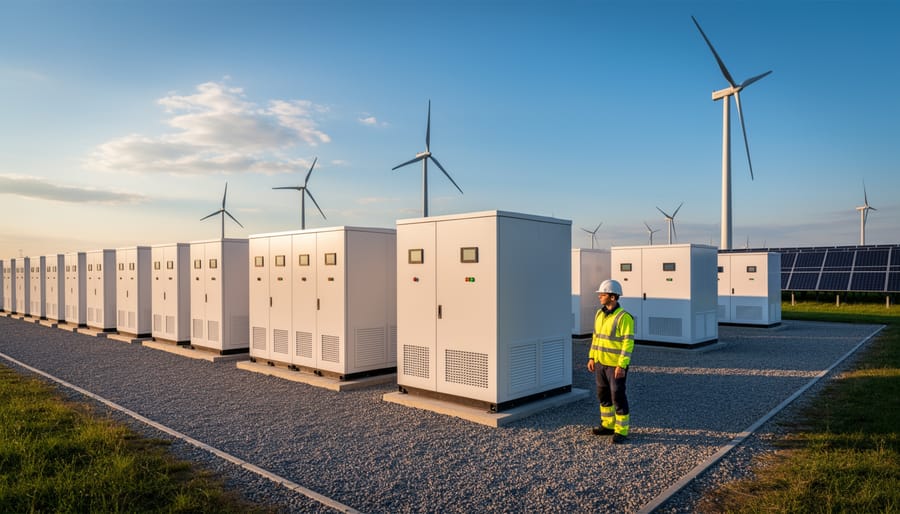
Energy storage has evolved from the weakest link in renewable systems to one of their strongest enablers. The fundamental challenge, capturing excess energy when the sun shines or wind blows, then releasing it during calm nights, now has multiple sophisticated solutions that weren’t commercially viable even three years ago.
Lithium-ion batteries still dominate residential installations, but their chemistry has improved dramatically. Modern lithium iron phosphate variants deliver 6,000 to 10,000 charge cycles compared to the 3,000 typical in 2020 systems. That translates to 15-20 years of daily cycling before capacity drops below 80%, making the economics far more compelling for homeowners who want true energy independence.
Solid-state batteries represent the next evolutionary step. These replace the liquid electrolyte in conventional batteries with a solid material, eliminating fire risk and enabling higher energy density. Early commercial units store 50% more power in the same physical footprint while operating safely at wider temperature ranges. For residential solar systems, this means smaller, safer battery banks that fit in compact spaces.
Flow batteries solve a different problem entirely. These systems store energy in liquid electrolytes contained in external tanks, allowing you to scale storage capacity independently from power output. A homeowner might install a 10-kilowatt system with enough tank capacity for three days of backup, then add more storage later without replacing the core unit. The chemistry degrades far more slowly than lithium systems, with projected lifespans exceeding 20 years of daily use.
The practical result: renewable systems now provide consistent power through multi-day weather events without fossil fuel backup, fundamentally changing the reliability equation that once limited solar and wind adoption.
Types of Renewable Energy Trends in 2026
Technological Innovation Trends
Bifacial solar panels represent one of the most commercially viable innovations gaining traction in 2026. Unlike traditional panels that capture sunlight on one side only, bifacial modules absorb light from both front and back surfaces, harvesting reflected sunlight from surrounding ground or rooftops. This design typically delivers 10-30% more energy output than standard panels, depending on installation conditions. Light-colored surfaces beneath the panels, concrete, white gravel, or snow, maximize the reflective benefit.
Floating solar farms address land scarcity while improving panel efficiency. These installations deploy photovoltaic arrays on reservoirs, lakes, and wastewater treatment ponds. The water beneath naturally cools the panels, boosting their output by 5-10% compared to ground-mounted equivalents. Beyond efficiency gains, floating systems reduce water evaporation from reservoirs and limit algae growth by shading the surface.
Perovskite solar cells have moved from laboratory curiosity to early commercial deployment. These materials convert sunlight to electricity more efficiently than silicon in certain conditions, and manufacturers can print them onto flexible substrates using roll-to-roll processes. Current prototypes achieve 25% efficiency in single-junction configurations, with tandem perovskite-silicon cells pushing beyond 30%. Durability challenges remain, perovskites degrade faster than silicon when exposed to moisture, but protective encapsulation techniques continue improving.
Advanced wind turbines now feature longer blades made from recyclable thermoplastic composites instead of traditional fiberglass. Blade lengths exceeding 115 meters allow turbines to capture energy from slower, steadier winds at greater heights, expanding viable installation sites. Offshore models incorporate floating platforms that deploy in deeper waters previously inaccessible to fixed-foundation turbines.
Green hydrogen production uses renewable electricity to split water molecules into hydrogen and oxygen through electrolysis. This carbon-free fuel can power vehicles, store excess renewable energy, or replace natural gas in industrial processes. Improved electrolyzer efficiency and falling renewable electricity costs are making green hydrogen economically competitive with fossil-derived alternatives for the first time.
Market and Economic Trends
The economics of renewable energy have shifted dramatically, making solar and wind installations financially accessible to a broader range of consumers than ever before. Solar panel costs have dropped roughly 90% since 2010, with average residential installation prices in 2026 hovering around $2.50 to $3.00 per watt, down from over $7 per watt a decade ago. This price compression stems from manufacturing scale, improved supply chains, and technological efficiencies in production.
New financing structures have democratized access beyond traditional cash purchases or loans. Residential power purchase agreements now allow homeowners to install solar systems with zero upfront cost, paying only for the electricity generated at rates typically 10-20% below utility prices. These agreements, once available only to commercial customers, have expanded to residential markets as third-party ownership models matured.
Community solar programs represent another economic shift, enabling renters and homeowners with unsuitable roofs to benefit from solar energy. Subscribers purchase or lease a portion of a larger off-site solar array, receiving credits on their utility bills proportional to their share of production. Over 40 states now permit some form of community solar, with participation growing 25% annually as utilities and developers recognize the model’s ability to accelerate renewable adoption without requiring individual roof installations or property modifications.
Integration and Infrastructure Trends
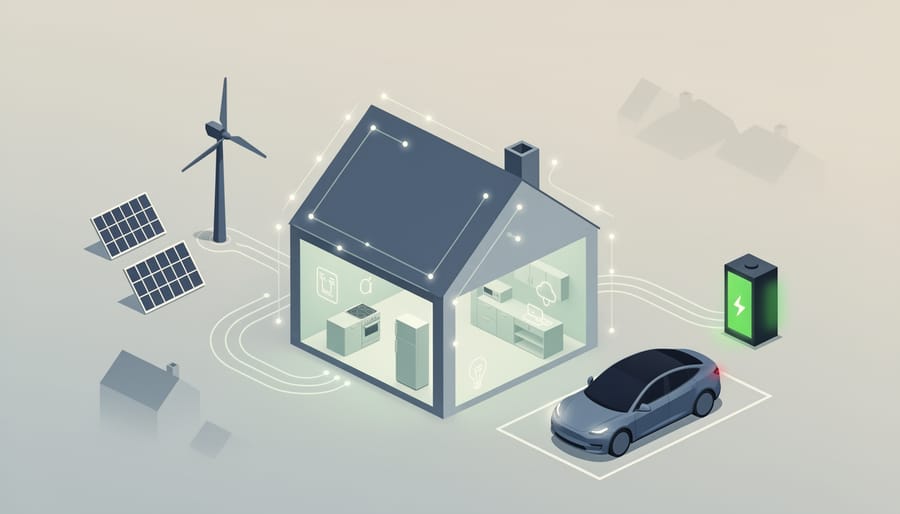
Electric vehicles are becoming mobile power banks through vehicle-to-grid (V2G) technology, which allows EV batteries to discharge electricity back into the home or utility grid during peak demand periods. When your solar panels produce excess energy during the day, it can charge your EV; at night, that stored energy can power your home or earn credits by feeding back to the grid. Ford’s F-150 Lightning already demonstrates this capability, providing up to three days of backup power for an average home during outages.
Residential microgrids represent another infrastructure evolution, creating localized energy networks that operate independently or in coordination with the main grid. A typical residential microgrid combines rooftop solar, battery storage, and smart controllers that automatically manage energy flow based on real-time conditions. During grid outages, these systems seamlessly disconnect and continue powering essential loads. In areas prone to extreme weather events, neighborhood-scale microgrids are becoming increasingly common, with multiple homes sharing resources to improve resilience.
The convergence of solar and EV charging infrastructure is reshaping home energy systems. Integrated solar-plus-storage-plus-charging solutions now come as packaged offerings from manufacturers like Tesla, Enphase, and SolarEdge. These systems prioritize solar energy for vehicle charging, reducing the grid impact of EV adoption while maximizing renewable energy use. Smart charging algorithms time vehicle charging to coincide with peak solar production hours, ensuring EVs run primarily on clean energy rather than grid power during evening charging sessions.
This integration fundamentally changes how homes interact with energy infrastructure, transforming them from passive consumers into active participants in a more flexible, resilient energy ecosystem.
Practical Applications and Uses
The renewable energy trends taking shape in 2026 aren’t just abstract technological advances, they’re already creating tangible opportunities for homeowners, businesses, and industries to cut costs and reduce carbon footprints.
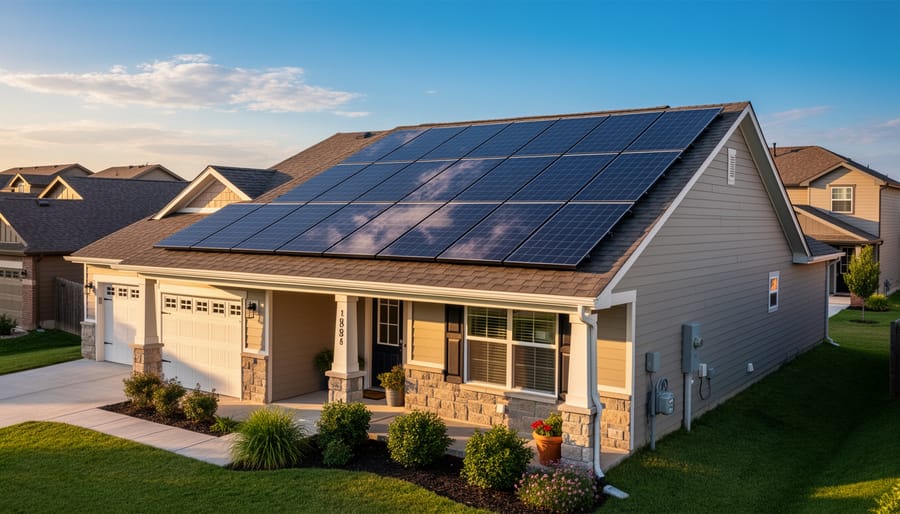
For residential properties, solar-plus-storage systems represent the most accessible application of current trends. Homeowners can now install solar panels paired with batteries that store excess daytime generation for evening use, effectively eliminating reliance on grid power during peak-rate hours. Modern systems integrate smart inverters that automatically optimize when to store energy, when to use it, and when to sell surplus back to the grid. A typical 6-kilowatt system with 10-kilowatt-hour battery storage can cover 80-90% of a household’s electricity needs in most regions, with monitoring apps providing real-time visibility into production and consumption patterns.
Commercial building retrofits have accelerated thanks to declining installation costs and improved financing options. Office buildings, retail centers, and warehouses are adding rooftop solar arrays combined with smart energy management systems that adjust lighting, HVAC, and equipment operation based on solar production levels. Some forward-thinking businesses are installing electric vehicle charging stations powered directly by their solar arrays, creating an additional revenue stream while attracting environmentally conscious customers and employees. The payback period for commercial solar installations has shrunk to 4-6 years in many markets, making the business case straightforward.
Agricultural operations are finding innovative ways to integrate solar without sacrificing productive land. Agrivoltaics, the practice of installing elevated solar panels over crops, allows farmers to generate income from electricity while continuing to grow shade-tolerant plants beneath the arrays. Vineyard owners in California have adopted this approach to protect grapes from excessive heat while generating power. Similarly, livestock operations are covering barn roofs and constructing solar canopies over feeding areas, reducing electricity costs for pumps, refrigeration, and climate control systems.
At industrial scale, manufacturers and logistics companies are deploying massive solar installations to hedge against energy price volatility. Distribution centers with expansive roof surfaces are ideal candidates, often generating more power than they consume during daylight hours. Heavy industries are exploring green hydrogen produced from renewable electricity as a replacement for natural gas in high-temperature processes. The aluminum and steel sectors have begun pilot programs demonstrating how solar-generated hydrogen can reduce emissions from smelting operations without compromising production capacity.
Expert Perspectives on Renewable Energy Evolution
Solar industry veterans consistently point to energy storage as the trend with the most transformative potential. “The conversation has shifted from whether you can generate enough solar power to whether you can store and use it intelligently,” explains Sarah Chen, a renewable energy consultant with fifteen years of utility-scale experience. She notes that homeowners who install solar in 2026 should prioritize battery-ready systems, even if they don’t purchase storage immediately. The infrastructure investment now prevents costly retrofits later.
Technology manufacturers emphasize the importance of interoperability. Modern renewable systems must communicate seamlessly with utility grids, home energy management platforms, and electric vehicles. Jake Morrison, product development director at a leading inverter company, warns against proprietary systems that lock users into single vendors. “Open standards matter more than flashy features. The home energy ecosystem is expanding rapidly, and you want components that can work with future additions.”
Energy consultants advise clients to look past headline efficiency numbers. “A panel that’s five percent more efficient but costs thirty percent more rarely makes financial sense for residential applications,” notes Dr. Linda Patel, who has conducted over 400 solar feasibility studies. She recommends focusing on proven reliability, strong warranties, and installers with long-term service commitments. The most expensive technology isn’t always the wisest investment.
For businesses, experts stress the value of modular approaches. Starting with a smaller, optimized system and expanding based on actual energy usage data typically outperforms oversized initial installations. Commercial solar should align with operational needs rather than theoretical capacity. The flexibility to adapt as energy demands evolve matters more than capturing every emerging technology on day one.
Frequently Asked Questions
Which renewable energy trends matter most for homeowners right now?
Solar-plus-storage systems and smart inverter technology offer the most immediate value for residential properties. These combinations allow you to store excess solar production for evening use and potentially participate in grid services programs that can reduce your electricity costs.
How long before emerging technologies like perovskite solar cells become available for home installation?
While perovskite cells show promise in laboratory settings, they likely won’t reach residential markets until 2028-2030 due to durability testing requirements. Current silicon panels remain your best option for reliability and proven performance over 25+ years.
Are renewable energy costs still dropping, or have prices stabilized?
Installation costs continue declining, though at a slower pace than the dramatic drops of the past decade. Expect modest annual reductions of 3-5% for solar systems, with battery storage costs falling more rapidly as production scales up.
Should I wait for newer technology before installing solar panels?
Waiting typically costs you more in foregone electricity savings than you’d gain from slightly improved future technology. Today’s panels are highly efficient and will generate clean power for decades, letting you start saving immediately while technology continues evolving.
How do I evaluate which trends are genuine improvements versus marketing hype?
Look for technologies with independent testing data, established track records in commercial applications, and backing from reputable manufacturers offering solid warranties. Be skeptical of claims that seem too good to be true or products without third-party performance verification.
Will vehicle-to-grid technology work with any electric vehicle?
Currently, only select EV models support bidirectional charging needed for V2G functionality. Check your vehicle’s specifications and confirm compatibility with your home energy system before planning to use your car as backup power storage.
Beyond these common questions, homeowners often wonder about the practical timeline for adopting specific innovations. The reality is that proven technologies deliver value today, while experimental approaches need years of real-world validation before they’re ready for your roof.
When evaluating emerging trends, focus on what solves your actual energy challenges rather than chasing the newest announcement. A well-designed system using current technology, properly sized for your consumption patterns and roof characteristics, will outperform a cutting-edge installation that doesn’t match your specific situation. The most successful renewable adopters choose solutions based on their energy goals and budget constraints, then upgrade components as technology advances and their needs evolve.
how it works
Renewable energy trends don’t materialize randomly, they follow a predictable pattern driven by technological breakthroughs, economic pressures, and regulatory changes. A trend typically begins in research labs where scientists identify a problem with existing renewable systems, such as efficiency losses or high manufacturing costs. When a solution shows promise, early-stage manufacturers develop prototypes and test them in real-world conditions.
Market forces then determine which innovations gain traction. Technologies that reduce installation costs, improve energy output, or solve practical problems like storage limitations attract investment capital. This funding accelerates development and brings production costs down through economies of scale. As prices drop, early adopters, often commercial entities with significant energy needs, begin implementing the technology.
Successful trends eventually reach residential markets once reliability is proven and costs become competitive with conventional alternatives. Regulatory incentives like tax credits or net metering policies can accelerate this adoption curve dramatically. Meanwhile, incumbent technologies don’t disappear, they evolve alongside newer innovations, creating a layered ecosystem where traditional solar panels, advanced storage systems, and smart grid technology work together rather than competing directly.
Types or components
Understanding renewable energy trends requires recognizing the four foundational components that enable their development and implementation.
Technological Infrastructure forms the physical backbone, solar panels, wind turbines, battery systems, and smart inverters that convert and store energy. These hardware elements undergo constant refinement, with manufacturers pushing efficiency boundaries while reducing material costs.
Data and Analytics Systems represent the digital layer. Sensors, monitoring software, and AI algorithms collect performance data, predict maintenance needs, and optimize energy distribution. This intelligence transforms static installations into responsive networks that adapt to changing conditions.
Policy and Regulatory Frameworks establish the rules governing renewable deployment. Net metering policies, tax incentives, interconnection standards, and building codes directly influence which trends gain traction. Regulatory support can accelerate adoption of promising technologies or create barriers that slow progress.
Market Mechanisms complete the ecosystem through financing models, utility programs, and consumer platforms. Power purchase agreements, community solar subscriptions, and green energy marketplaces determine how renewable technologies reach end users. These economic pathways often prove as crucial as the technology itself in determining which trends achieve widespread implementation.
The renewable energy landscape has shifted from simple technology adoption to a sophisticated ecosystem of interconnected innovations. Solar panels now communicate with batteries, electric vehicles, and utility grids. Storage systems have evolved beyond backup power to become central components of home energy management. These aren’t isolated advances, they’re pieces of a larger transformation that makes clean energy more reliable, affordable, and practical for everyday use.
What matters most isn’t chasing every new development, but understanding which trends align with your specific situation. A homeowner in California faces different opportunities than a business owner in Texas. Your roof orientation, local utility rates, and energy consumption patterns determine which innovations deliver real value versus marketing promises.
Start by assessing your current energy usage and costs. This baseline reveals where renewable solutions create the most impact. Then research technologies that address your specific challenges, whether that’s high daytime electricity rates, frequent power outages, or simply reducing your carbon footprint. Talk to multiple installers who can explain how different systems work in your climate and with your utility company.
The renewable energy sector will continue evolving rapidly. New battery chemistries will emerge, solar efficiency will improve, and integration technologies will become more seamless. But the fundamentals remain constant: evaluate options based on proven performance data, realistic payback calculations, and how well they serve your energy goals. Make decisions on facts, not forecasts.